When the COVID-19 Public Health Emergency ended, Cityblock's verbal consent process was no longer compliant.
The problem: Cityblock had no digital consent flow and without one we would fail audits, face claim denials, and miss a hard deadline tied to an EHR rollout for 1000+ frontline staff.
My design reduced Docusign costs by 73% and cut time to consent in half.
Decisions and tradeoffs
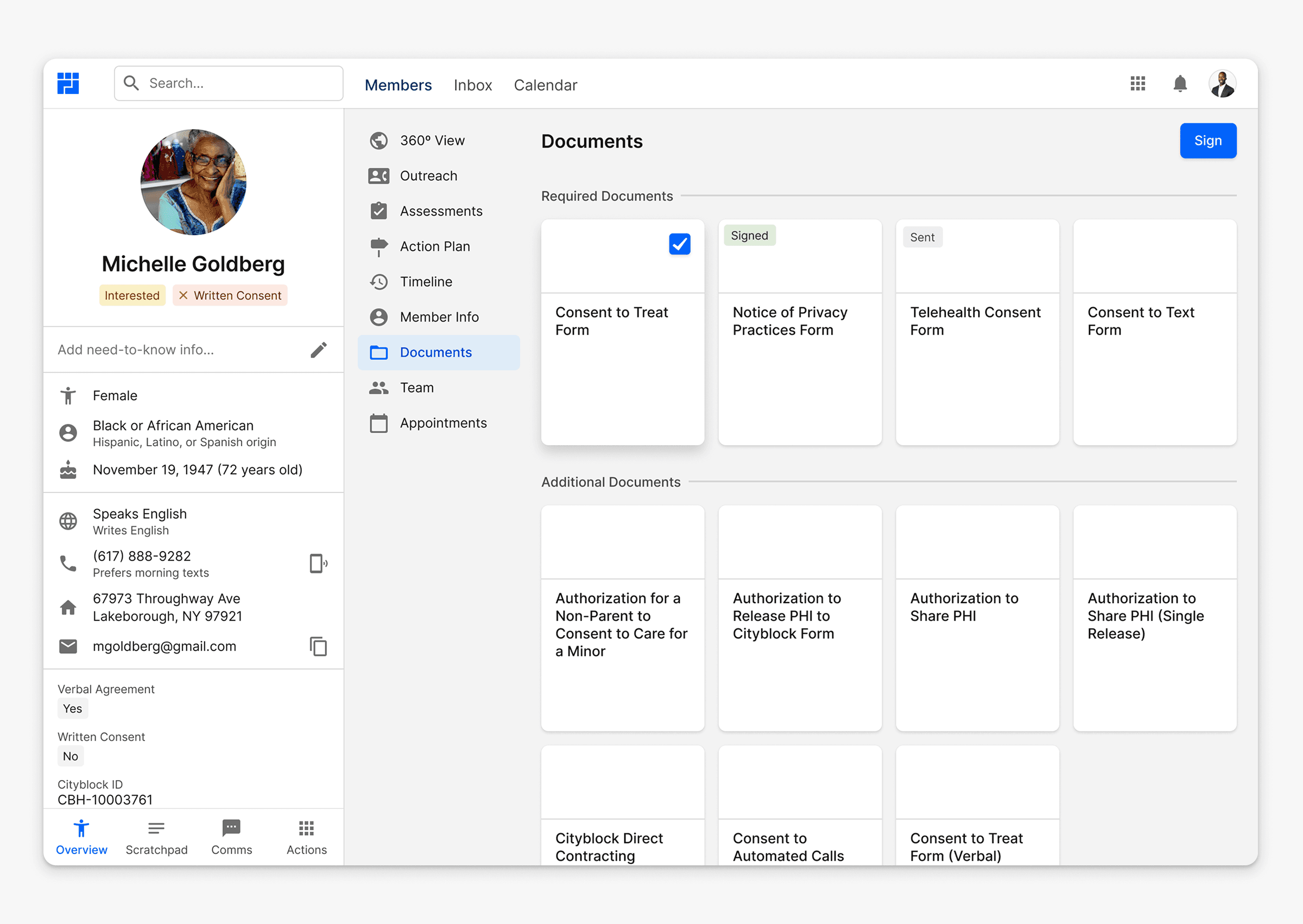
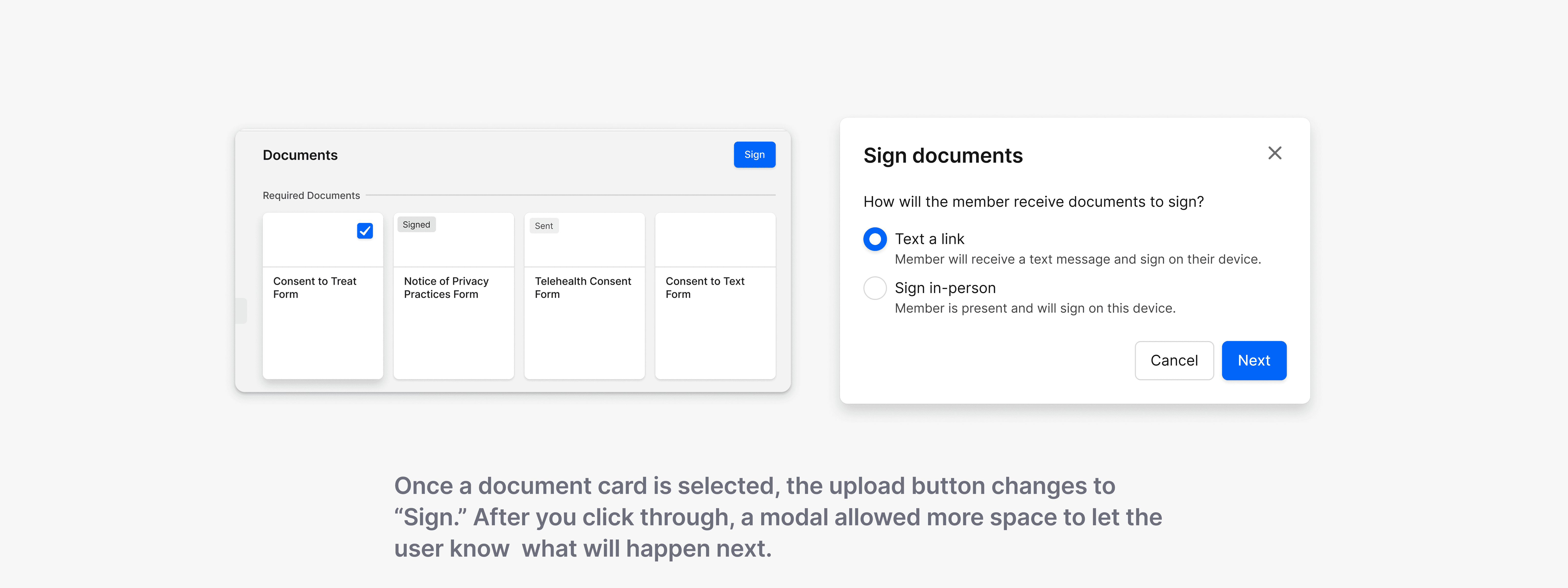
My first consent flow prototype asked staff to choose a delivery method upfront, before they had enough context to decide. A modal that revealed information progressively felt faster and less demanding. Smart role-based defaults kept flexibility without adding friction.
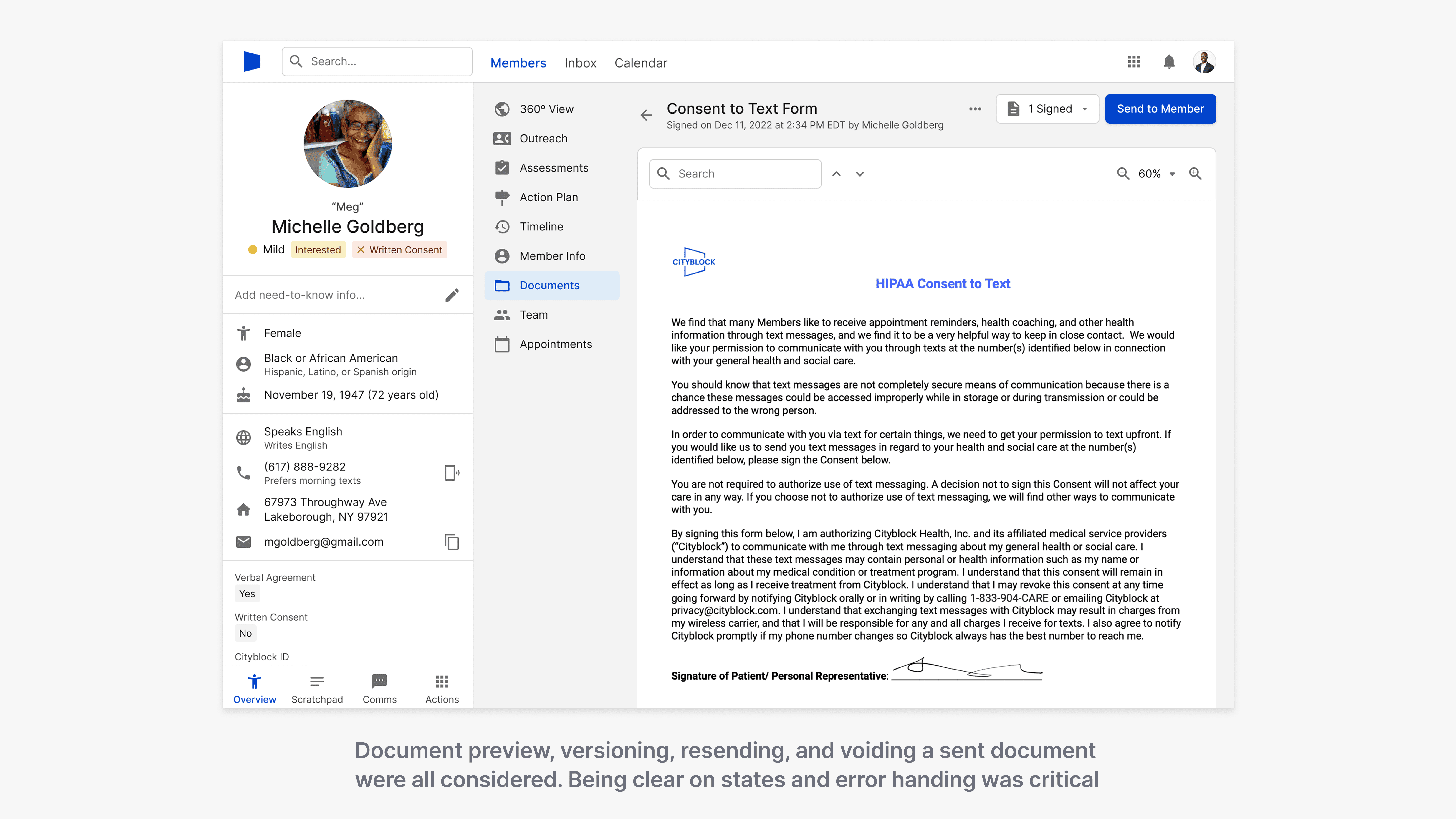
Docusign's API threw a harder constraint: 20+ second delays made real-time status tracking a non-starter. Rather than make users wait, I proposed immediate "sent" confirmation with errors surfaced only if they occurred. I validated with engineering that those errors would be rare enough to justify the tradeoff.
A one-document-at-a-time signing flow would've met the compliance requirement, but sending members multiple texts with long URLs would hurt conversion. I designed and validated a bulk-send flow in parallel, sequenced so we hit the deadline without sacrificing what came next.
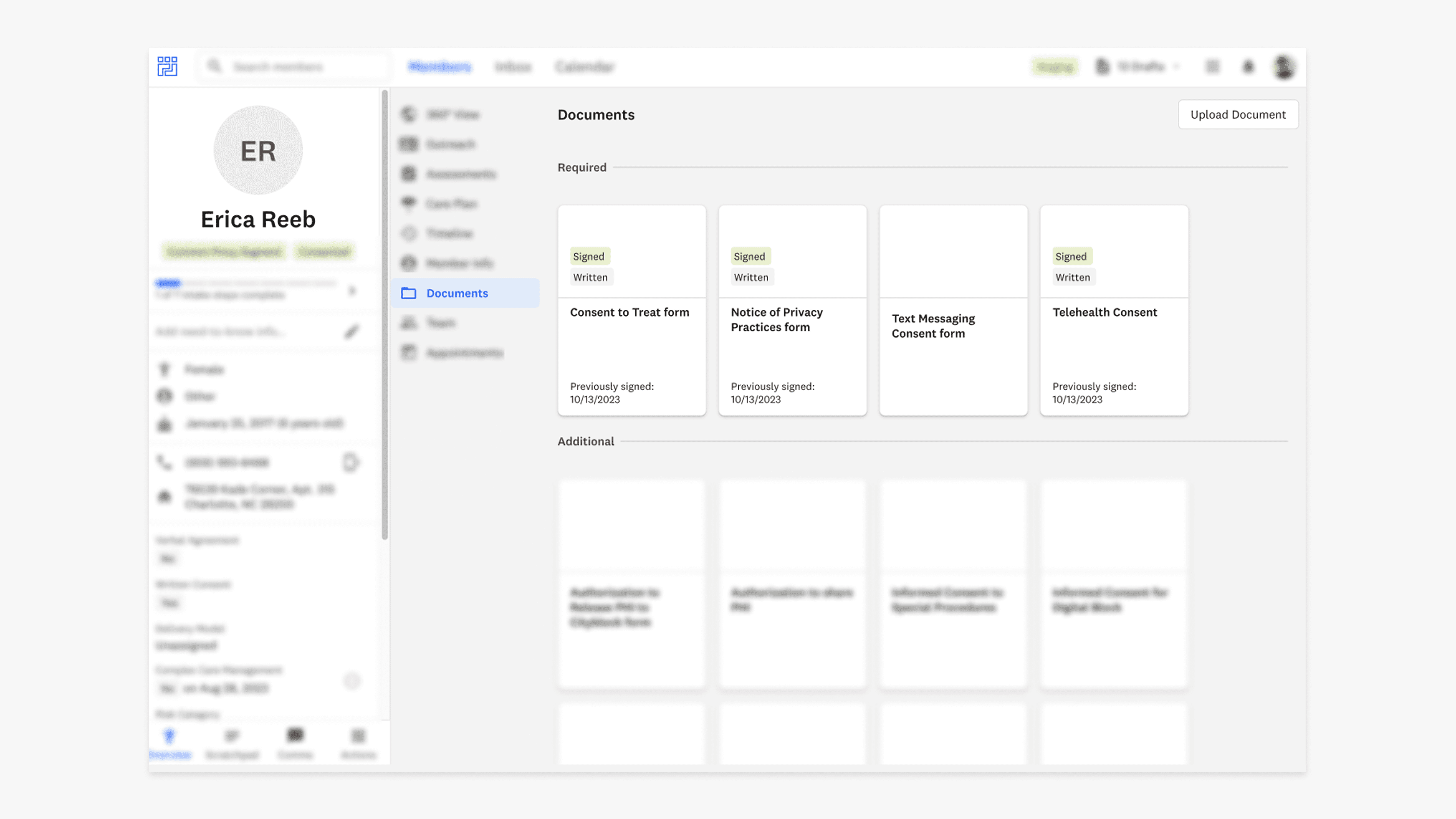
Shipped on time. Then its patterns spread.
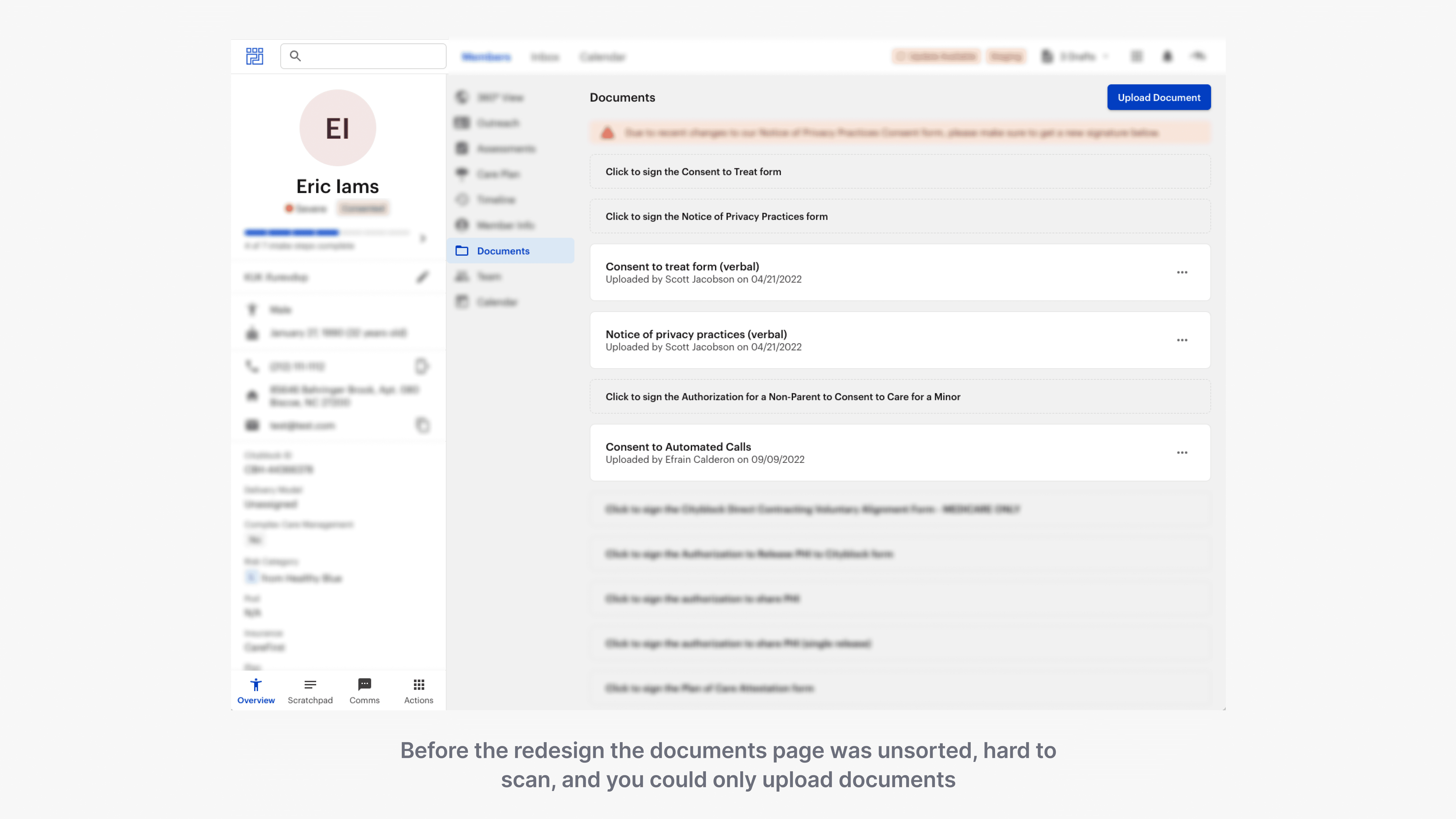
We launched before the deadline, and the version control system I designed became the platform standard for versioning history. The async status framework shaped how self-service features were built.
The bulk-send flow launched shortly after — and was so intuitive our operations partners decided it needed no training. Just an email with a quick video.
Bulk sending cut Docusign costs by 73% and cut time to consent in half
Reflection
When consent rates dropped after launch, an expected consequence of moving from verbal to digital, leadership pushed to add verbal confirmation back in. I accepted the workaround, and it became UX debt. Now I treat getting stakeholders aligned on the right success metrics as a design problem to solve before launch, not after.