"Oh, this one… I might have to call them first. They get angry sometimes"
Frontline staff walk into patient's homes every day, sometimes dangerous ones. While shadowing a Cityblock EMT in the Bronx, I spotted the gap, pushed to get it prioritized, and drove it from observation to shipped feature.
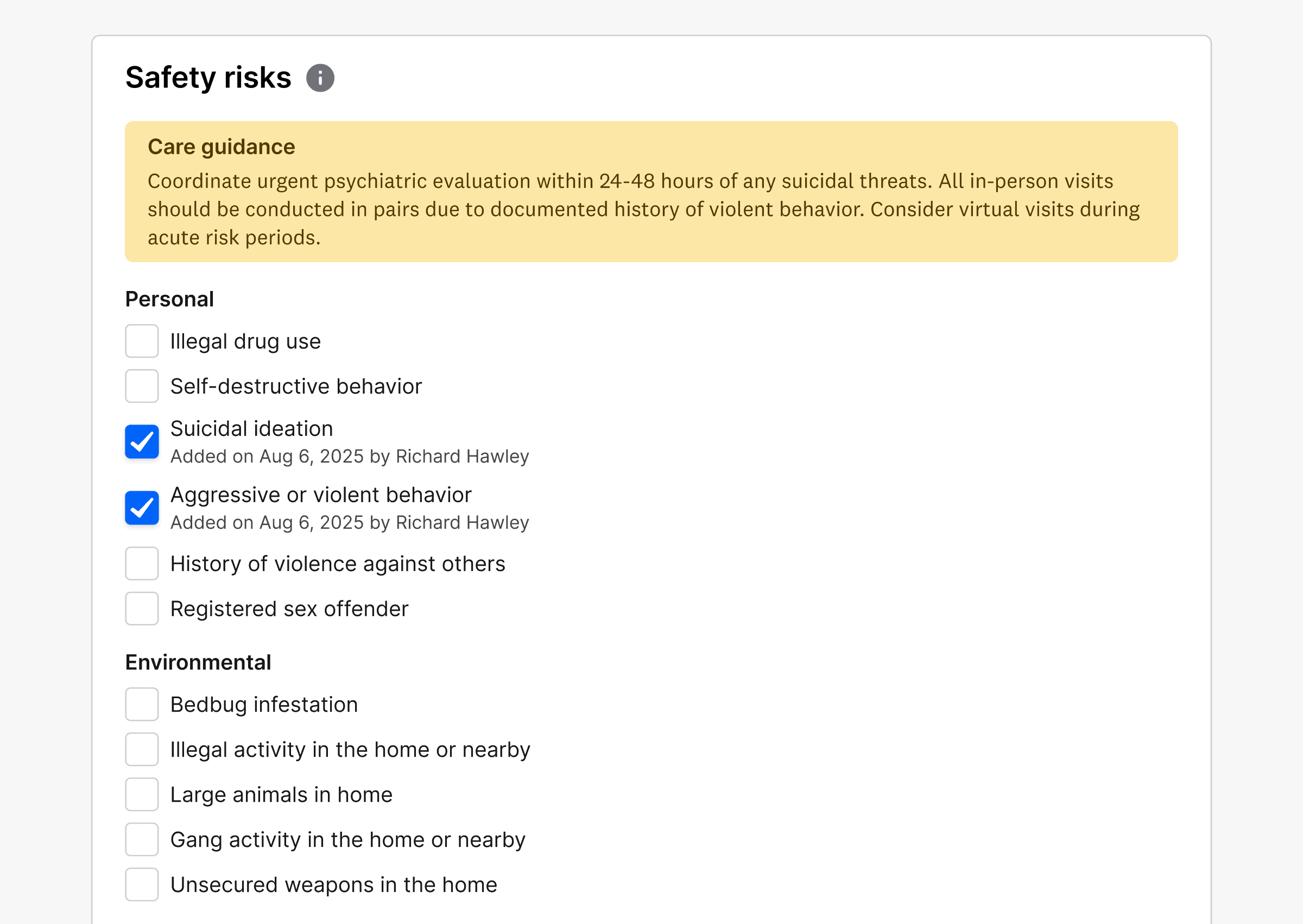
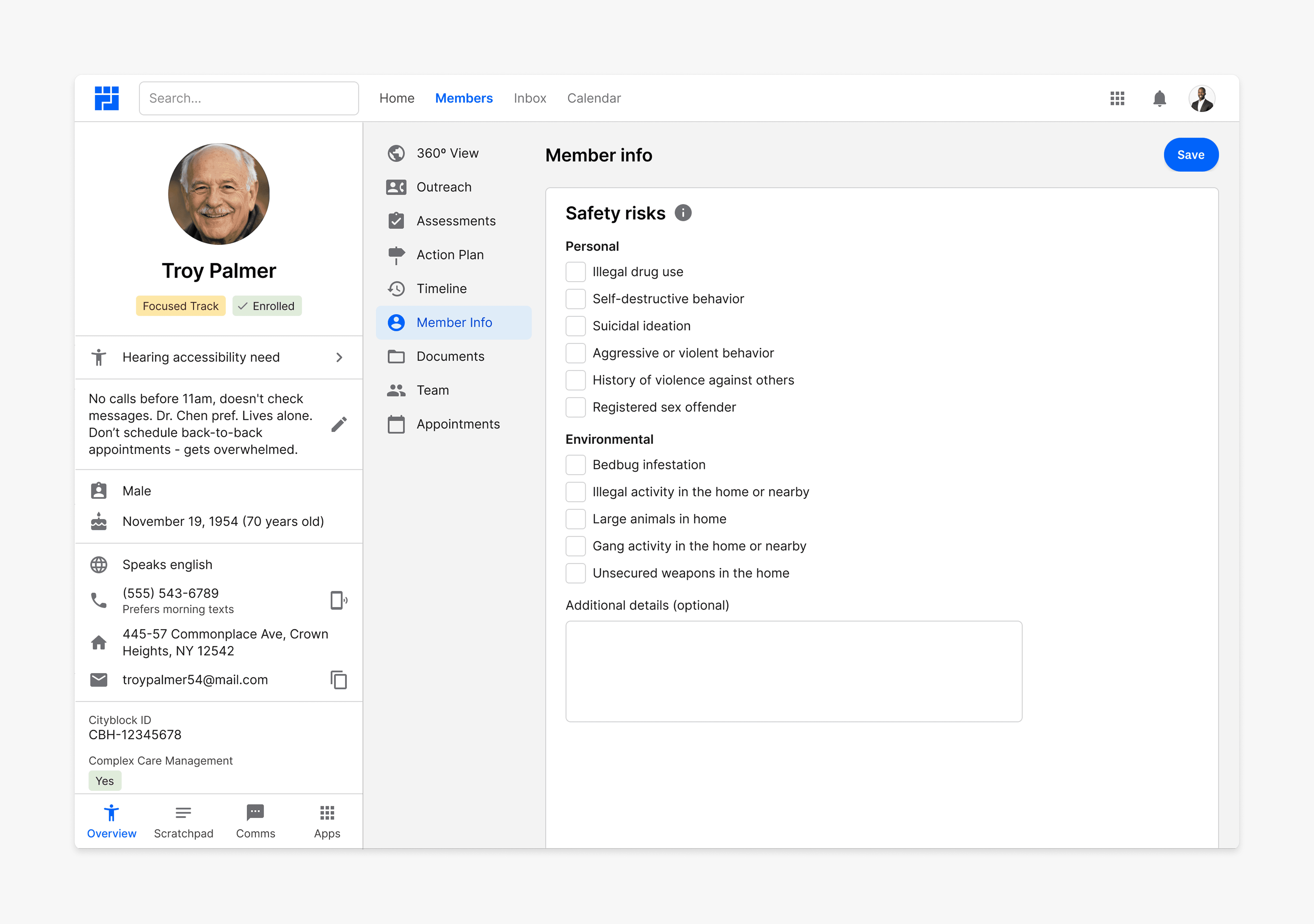
The problem: Staff walking into members' homes had no way to know if a visit was dangerous. Safety risks were scattered across free-text fields in the software without a way to consistently bring them to staff's attention.
Result: Adopted across all markets. 80+ members with incorrectly logged risks caught and backfilled on launch.
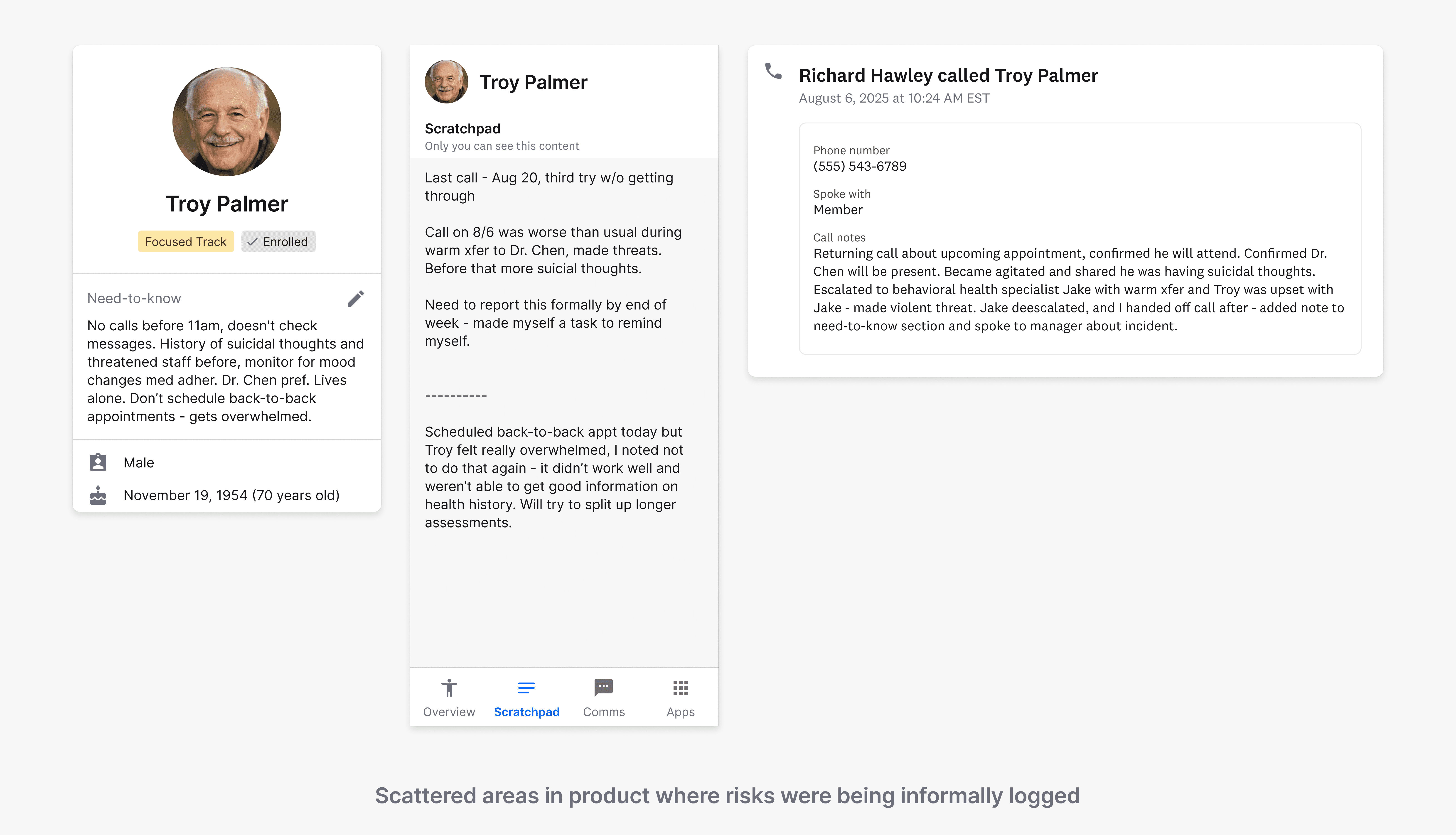
The information existed. No one could find it.
Safety-relevant information existed, but it lived in personal notes, informal free-text fields, or nowhere at all. A formal risk-logging process existed outside the software, but almost no one used it.
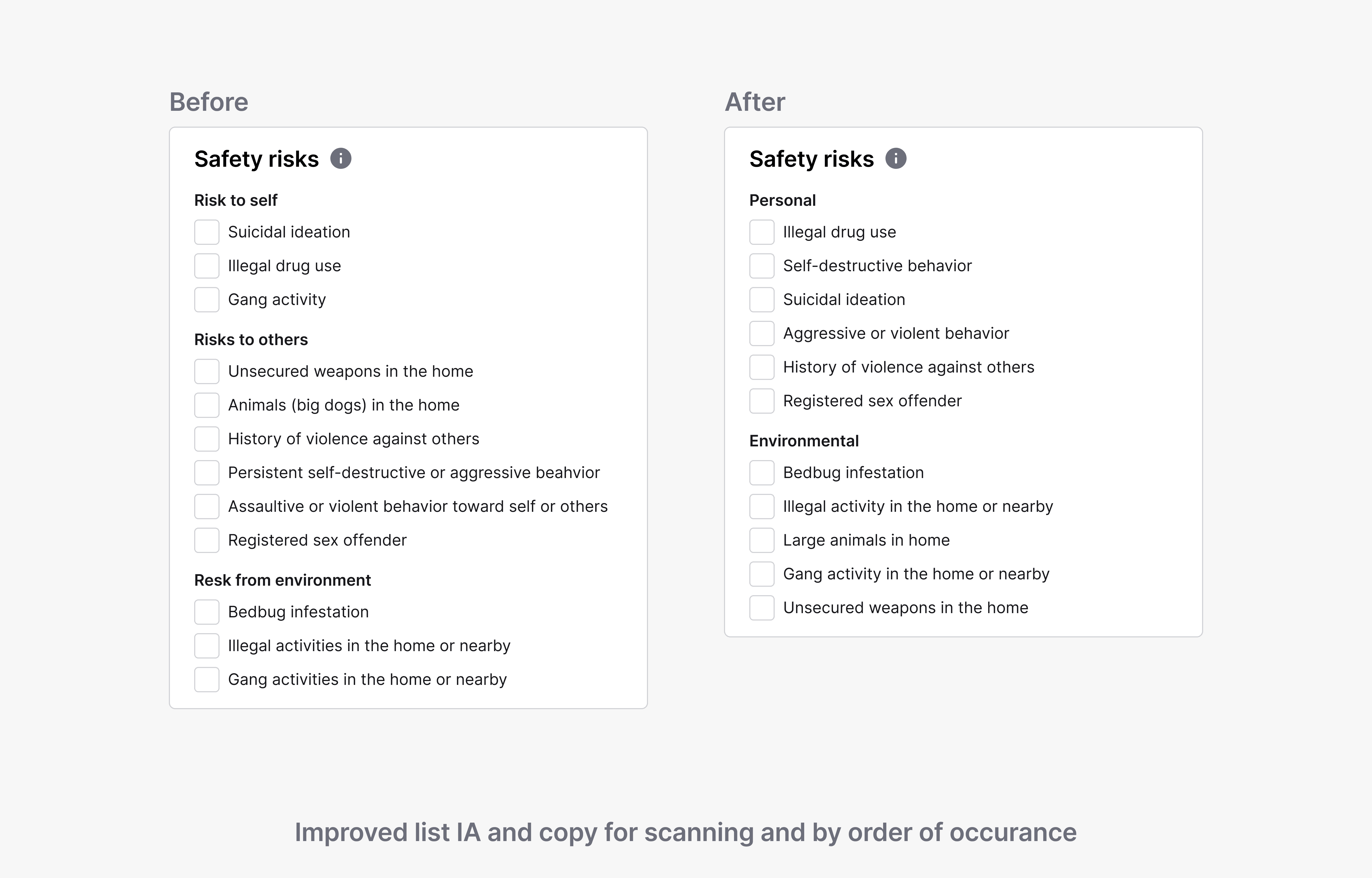
When compliance shared their risk taxonomy, it was the same list from the external tool staff had already ignored. The categories were organized around reporting requirements, not around how staff actually thought about safety. I worked with them to adapt it, making the risks easier to recognize and faster to log.
Surfacing risk wasn't enough
Early prototypes exposed a deeper issue. Knowing a member had a history of violence wasn't useful on its own. Staff needed to know what to do next. I worked with care managers to define appropriate guidance for each risk and added it to the design.
I also recognized that safety risks and accessibility needs were the same type of information. Both change how a staff member shows up to a visit. I partnered with the designer working on accessibility to unify our patterns so both appeared consistently in one place.
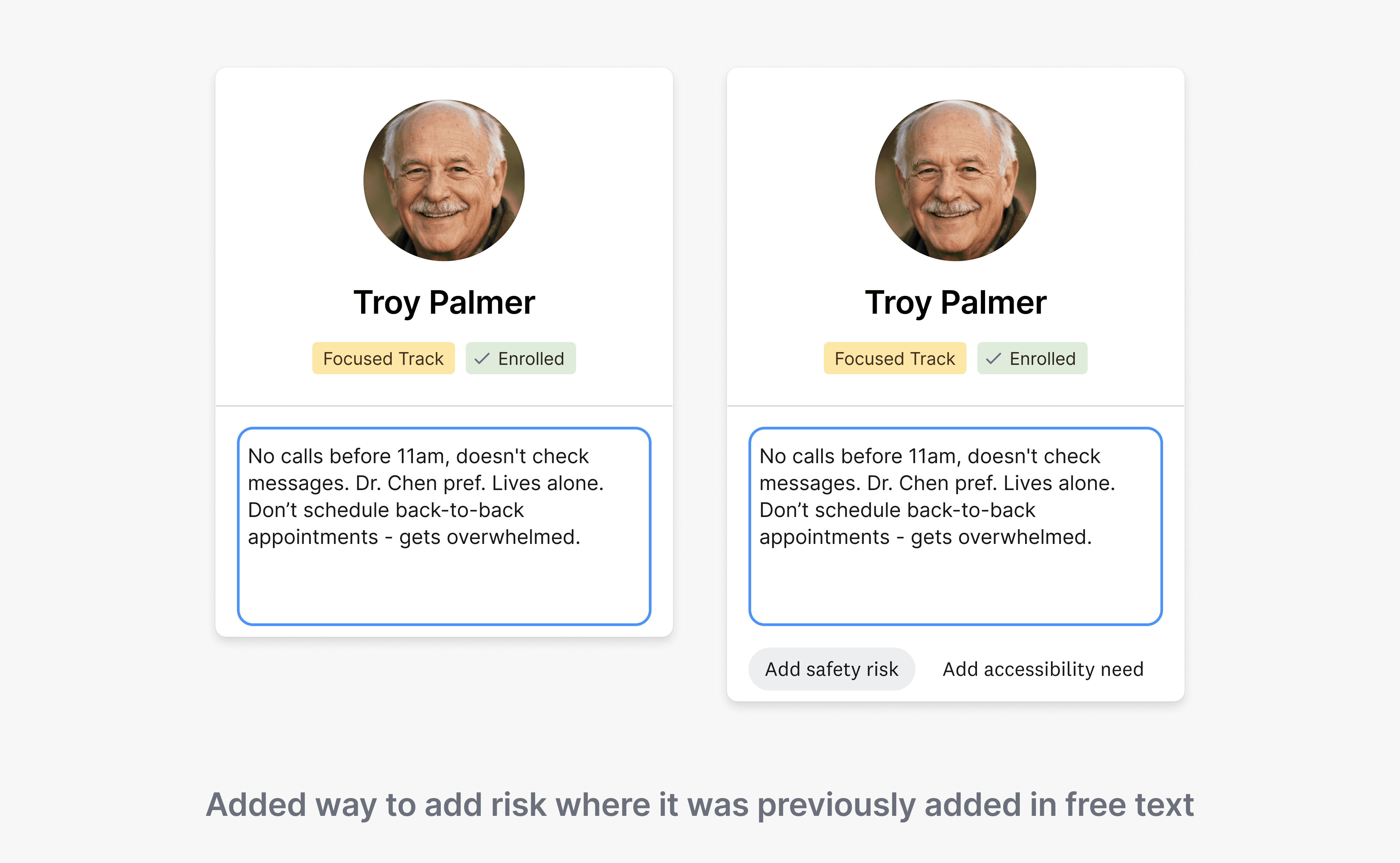
Staff were already documenting risks informally in the need-to-know section, so I embedded the logging entry point there — meeting them where they already were, instead of asking them to change their behavior. Usability testing with four staff members confirmed the flow — they found risks, understood next steps, and logged new ones without prompting.
Impact
Safety information that once lived in personal notes was now shaping how visits were planned and staffed. Assessment responses automatically activated relevant risks, and in the scheduling flow, active risks surfaced alongside guidance, nudging schedulers to book two staff members when a visit required it.
About 80 members with unlogged safety risks were identified and backfilled into the new system.